Knobbly Gold: A November Afternoon with Quinces, Three Jars and a Warm Oven
There is a moment in early November when the greengrocer's display takes on a different colour. The last soft fruits have gone, the apples are in their sturdy boxes, and there, looking like a bowl of misshapen pears and golden stones, are the quinces. They are not tidy fruit. They are not the sort you bite into on the way home. But they smell extraordinary, and they belong exactly here, at the point where the kitchen turns inward and the oven comes on for company as much as for cooking.
Quinces ask for an afternoon rather than a five-minute gap between emails. That is part of their charm. Buy a modest bag, clear a little space on the hob, and let the house fill with that soft, honeyed, almost rose-like scent. This is not marathon preserving. It is one fruit, a few small jars, and a quiet November afternoon.
Choosing a Good Quince
Look for fruit that feels heavy for its size and is hard as a cricket ball. The skin should be yellow, perhaps with a greenish shoulder, and the whole thing ought to be fragrant before you even lift it. Avoid any with soft brown patches, deep bruises or a waxy, tired look. A little natural fuzz is fine; rub it away with a cloth when you get home.
At the market, choose fruit that is just beginning to ripen. Quinces will continue to soften and perfume a room after picking. If they are rock-hard, give them a week in a cool, airy place. If they are already yielding slightly near the stem, use them sooner rather than later.
Storing Them Without Fuss
Quinces keep well in a cool, dark, airy spot: a garage shelf, an unheated porch, a spare room that stays cold but frost-free. Lay them in a single layer on newspaper or in a shallow crate, not touching if you can manage it, and check them once a week. One going over will scent the whole box, but it will also encourage its neighbours to follow. Bring them into the kitchen as you need them, and use up any that begin to soften.
A short spell in the fridge is fine if your kitchen is warm, but the fruit will lose some of its perfume. Better to keep them cool and use them within a few weeks. This is not a fruit for the back of the cupboard and a vague promise in January.
Before You Start: Jars and Patience
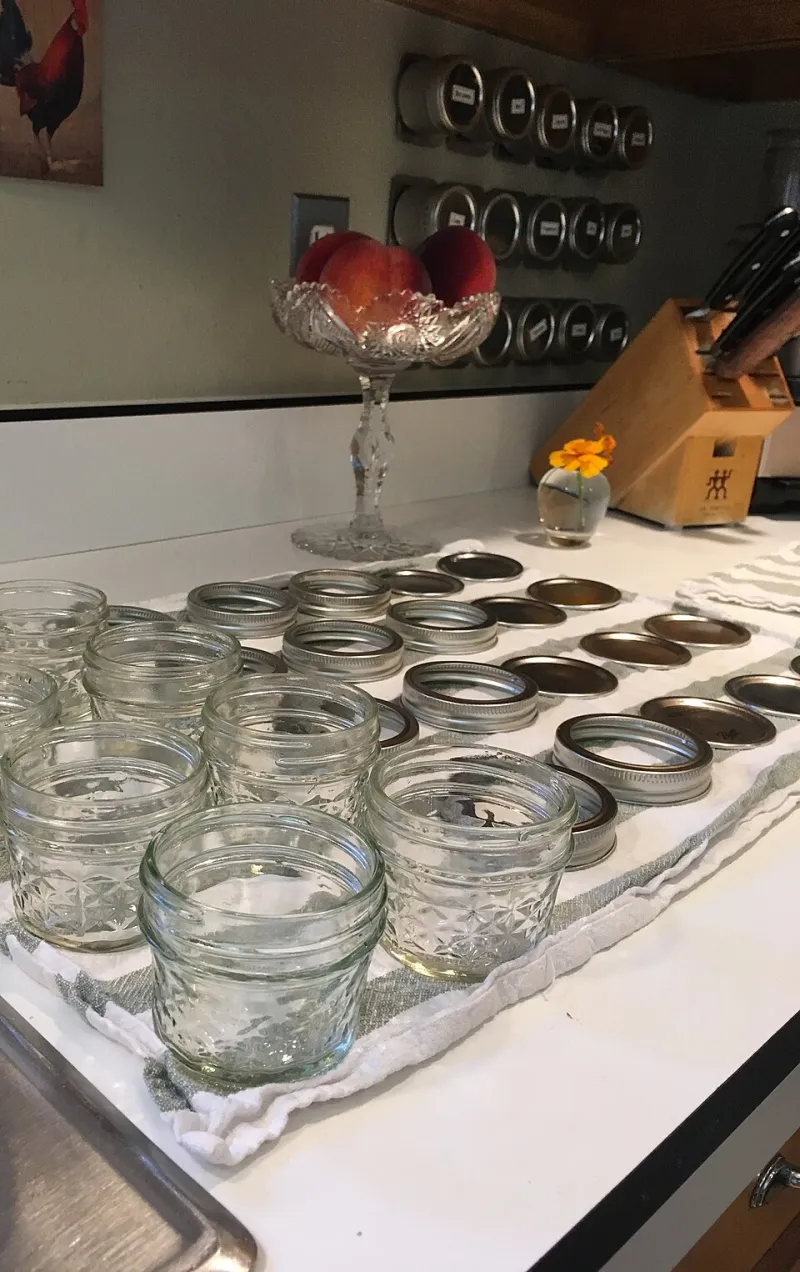
Sterilise a few small jars rather than one big one. Quince paste and butter are rich things, and small jars are kinder to a household of two. Wash the jars in hot soapy water, rinse, and dry them in a low oven while you cook. Boil the lids for a few minutes and let them air-dry on a clean tea towel.
You will also need a sturdy pan, a wooden spoon and a little patience. Quinces are high in pectin, so they set beautifully, but they take their time. Do not rush the simmering. The fruit will tell you when it is ready.
Membrillo: A Small Loaf Tin of Gold
Membrillo, or quince cheese, is the classic. It is sweet, firm and faintly sharp, and it is very good with a slab of mature Cheddar or a piece of salty sheep's cheese. This makes one small 20cm loaf tin, enough for several cheese boards.
Take 1kg of quinces. Wash them, rub off the fuzz, and chop them roughly, skin, core and all. Put them in a heavy pan with the juice of half a lemon and enough water to come about halfway up the fruit. Bring to a simmer, then cover and cook gently for 30 to 40 minutes, until the pieces are soft enough to crush against the side of the pan.
Push the pulp through a sieve or a mouli, or blend it and pass it through a sieve if you want a smoother paste. Weigh the pulp. For every 500g of pulp, allow 400g of granulated sugar. Return the pulp and sugar to the pan and cook over a low heat, stirring often, until the mixture is thick, glossy and pulls away from the base of the pan. This can take 30 to 45 minutes. A little dab on a cold plate should wrinkle when you push it with a finger.
Line the loaf tin with baking parchment, spoon in the paste, smooth the top, and leave it somewhere cool overnight. Wrap it in parchment and keep it in the fridge. Cut it into slices or cubes to serve.
Quince and Apple Butter: The Softer Jar
If membrillo is the firm, formal preserve, quince and apple butter is the spoonable one. It is excellent on toast, stirred into yoghurt, or served beside cold roast pork. Bramleys bring a welcome sharpness and help the mixture soften.
Use 500g of prepared quinces and 500g of Bramley apples, both peeled, cored and chopped. Put them in a pan with 300g of light brown sugar, a teaspoon of ground cinnamon, a pinch of ground cloves, the juice of half a lemon and a splash of water. Cook gently, covered, for about 30 minutes, until everything collapses. Uncover, turn up the heat a little, and cook down, stirring, until the mixture is thick enough to hold a spoon's trail. Blend smooth if you like, then spoon into warm sterilised jars.
This is a softer set, so keep the jars in the fridge and use within a month, or process them according to a reliable preserving guide if you want them to keep longer on the shelf.
Poached Quinces for the Morning
Keep one or two back for the simplest treatment of all. Peel, core and quarter 2 quinces, then put them in a pan with 500ml water, 150g sugar, a strip of lemon peel, a cinnamon stick and a split vanilla pod if you have one. Bring to a gentle simmer and cook for 40 to 50 minutes, until the fruit is tender and translucent at the edges. Leave to cool in the syrup.
Spoon the poached quinces over porridge, with a little of the syrup. Or serve them at room temperature with cheese, a spoonful of thick cream, or a slice of plain cake. The syrup is worth keeping too: stir it into a glass of fizzy water, or spoon it over rice pudding.
By the time the jars are cooling on the counter, the kitchen will smell of quince and sugar and the dark afternoon will feel properly used. Three small jars, one pot of poached fruit, and the first real preserve of the winter larder. That is a good November afternoon's work.