The Quiet Sauce: Bread, Cloves and a November Make-Ahead
Photo: Daderot, CC0, via Wikimedia Commons
There are sauces that announce themselves and sauces that simply get on with it. Bread sauce belongs firmly in the second camp. It arrives at the Christmas table in a modest jug, pale and slightly lumpy if we are honest, and is spooned alongside the turkey with the air of something that has been included out of duty rather than desire. Which is a shame, because made properly — with stale bread, whole milk, a clove-studded onion and a grating of nutmeg — it is one of the most quietly satisfying things you can put on a plate.
By mid-November, the Christmas menu is already being sketched out on the back of envelopes in kitchens across the country. Bread sauce is the one element that can be made now, frozen without complaint, and revived on the day with very little fuss. It is also a sauce with a longer reach than the festive bird. Once you have a small tub in the freezer, you will find uses for it through the darker weeks of the year.
A Sauce With a Longer History Than the Turkey
Bread-thickened sauces have been part of British cooking for centuries. Before the widespread use of flour as a thickener, cooks used stale bread to give body to pottages, gravies and sauces. The combination of bread, milk and onion is an old one, and it appears in household books long before the modern Christmas dinner took its familiar shape. Mrs Beeton gave a version in the nineteenth century, and regional cooks have argued over the finer points ever since: whether to use cream, whether to blend, whether the onion should be removed or left in, and how much nutmeg is too much.
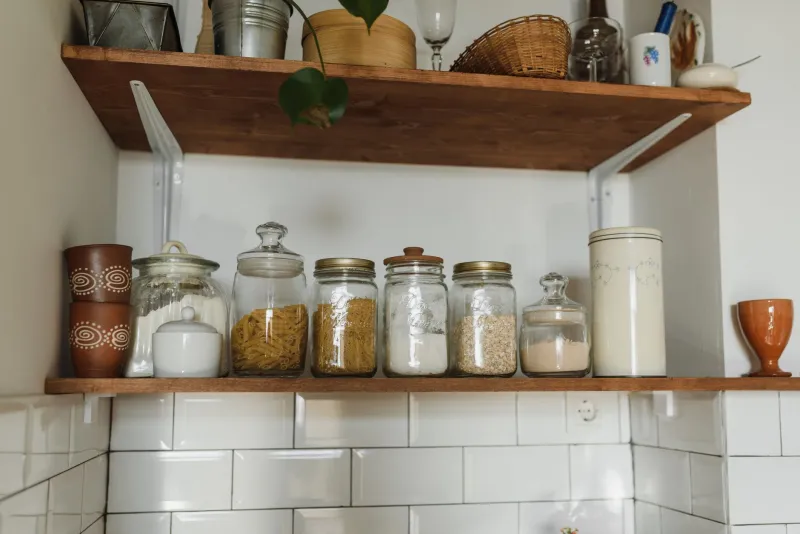
The turkey is a relative newcomer to the British table, but bread sauce has been soothing its way through roast meats for far longer. It was never a showpiece. It was the sauce that made the most of what was already in the pantry: a heel of bread going stale, a few cloves from the jar, a bay leaf from the garden. That is precisely why it belongs on Nancy's Larder. It is pantry cooking at its most unassuming.
The Small-Batch Method
This makes enough for four to six people as part of a roast, or a generous tub for the freezer. It is easy to scale up, but a small batch is more forgiving and less likely to turn gluey.
You will need 100g of stale white bread, crusts removed if you prefer a smoother sauce, and 300ml of whole milk. Use a small onion — about half a medium one — and stud it with four cloves. Add a bay leaf, a good grating of nutmeg, a knob of butter and a little white pepper. Cream is optional at the end, but a tablespoon or two makes the sauce silkier.
Warm the milk gently with the studded onion and bay leaf. Do not let it boil. Take it off the heat and leave it to infuse for twenty minutes or so. The onion should soften and the milk should smell faintly sweet and spicy. Remove the onion and bay leaf, then add the torn bread. Return the pan to a low heat and stir until the bread collapses into the milk. This will take five to ten minutes. If it looks too thick, add a splash more milk. If it looks too thin, let it bubble gently for a minute or two longer.
Season with salt, white pepper and nutmeg. Stir in the butter, and a little cream if you are using it. You can blend the sauce for a smooth finish, but many cooks prefer it with a little texture. Either way, taste it before it goes into the tub. Bread sauce is forgiving, but it does need enough salt to bring out the sweetness of the milk and onion.
Freezing and Reviving
Let the sauce cool quickly, then spoon it into a freezer-safe tub or a resealable bag pressed flat. It will keep for up to three months. Flat bags are particularly useful if freezer space is tight in December.
To revive, defrost overnight in the fridge and warm gently in a pan, stirring often. It will thicken as it heats, so add a little milk or cream to loosen it. A fresh grating of nutmeg at the end wakes it up. If you are short on time, defrost in the pan over a very low heat with a splash of milk and a lid on, stirring every few minutes. Do not let it catch.
Beyond the Christmas Plate
Bread sauce is not only for turkey. It is very good with roast chicken, especially on a Sunday when the meat is plain and the sauce does the comforting work. It makes a generous spoonful alongside roast pork, where its mild sweetness sits well with the crackling. It can be folded into mashed potato for a softly spiced alternative to plain mash, or used as a sauce for poached leeks and mushrooms on toast.
In November, when the kitchen is dark by four and the oven is on more often than not, a small tub of bread sauce in the freezer feels like a quiet bit of forward planning. It is not glamorous. It will never be the star of the table. But it is the sort of pantry staple that earns its place — made from stale bread, a little milk and a few cloves, and ready when you need it.