A Quiet Sunday, a Warm Oven: Baking Your Way Through the Dark Months
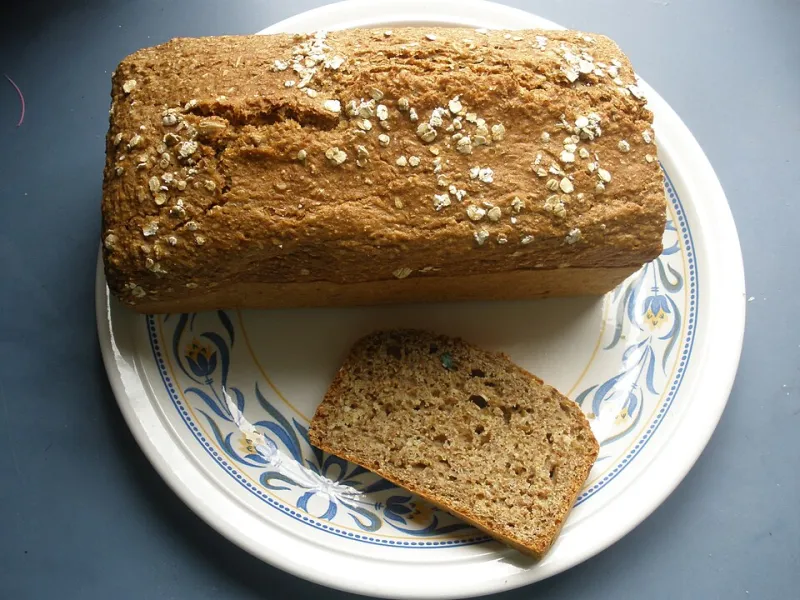
Photo: O'Dea, CC BY-SA 4.0, via Wikimedia Commons
Every year, somewhere around the second week of November, the kitchen starts to feel like the best room in the house. It is dark by half past four, the heating is on, and there is a particular pleasure in turning on the oven when the weather outside is doing its worst. This is the season for what I think of as pantry baking: not showstopper cakes, not fiddly biscuits, but the everyday bakes that keep a tin full and a household cheerful.
Why a baking Sunday is worth the faff
There is a school of thought that says baking should be spontaneous. I understand the appeal, but I would argue for a quiet Sunday session instead. One afternoon of measured, unhurried baking can stock the pantry for the week ahead and give you a genuine sense of having looked after yourself. It is also cheaper than buying a weekly haul of packaged snacks, and it makes the house smell like a place you want to be.
The trick is not to attempt too much. Three reliable bakes is plenty: a seeded soda bread, a sticky parkin and a tray of oat flapjacks. None of them require yeast, none of them need a stand mixer, and all of them freeze or keep well. Together they cover breakfast, tea and the general business of getting through the darker months.
The three bakes
Seeded soda bread
Soda bread is the weeknight baker's friend. It comes together in one bowl and is in the oven before you have finished tidying up. For one loaf, mix 250g wholemeal flour with 200g plain flour, a teaspoon of bicarbonate of soda, a teaspoon of salt and a handful of mixed seeds. Add about 350ml buttermilk — or milk with a squeeze of lemon — and bring it together into a soft, slightly shaggy dough. Shape it into a round on a floured tray, slash a cross in the top, scatter with oats and seeds, and bake at 200°C for about 30–35 minutes, until it sounds hollow when tapped underneath.
Cool it on a rack, then slice. It is best on the day it is made, but it freezes beautifully in slices, ready for the toaster.
Sticky parkin
Parkin is a Yorkshire classic, and it is one of those rare cakes that improves with keeping. You will need 100g butter, 100g golden syrup, 100g black treacle, 100g soft brown sugar, 200g medium oatmeal, 150g plain flour, a teaspoon of ground ginger, a teaspoon of baking powder and one egg. Melt the butter, syrup, treacle and sugar together, then stir in the dry ingredients and the beaten egg. Pour into a lined tin — roughly 20cm square — and bake at 160°C for around 45 minutes, until firm but still a little sticky in the middle.
Wrap it in greaseproof paper and keep it in a tin. After a few days it will be dense, moist and deeply treacly. It is the kind of cake that makes a pot of tea feel like an event.
Oat flapjacks
Flapjacks are not glamorous, but they are endlessly useful. Melt 150g butter with 100g golden syrup and 100g soft brown sugar, then stir in 250g porridge oats and a handful of seeds or dried fruit. Press into a lined tin and bake at 180°C for about 20 minutes, until golden at the edges. Score into squares while warm and leave to cool completely before turning out.
They keep for a week in a tin and freeze well, though they rarely last long enough to need it.
A gentle timetable for the day
Start with the parkin, because it takes the longest and benefits from a slow bake. Get it in the oven at about 10am, then use the waiting time to gather the soda bread ingredients. Mix and bake the bread while the parkin cools. By early afternoon you can make the flapjacks, which take barely half an hour from cupboard to tin. There is no need to wash up everything as you go — just keep a bowl of warm water handy and deal with the worst of it at the end.
Stocking, storing and freezing
The point of a baking Sunday is not to eat everything at once. Cool everything completely before storing. Bread goes in a paper bag or a bread bin and is best eaten within two days; sliced and frozen, it will keep for up to three months. Parkin should be wrapped well and kept in a tin — it will be even better after a few days. Flapjacks go in an airtight tin, layered with greaseproof paper if you are being tidy.
Label anything you freeze with the date and contents. A roll of masking tape and a pen by the freezer is a small thing that makes a big difference.
The case for a full tin
There is something quietly reassuring about knowing there is cake in the tin and bread in the freezer. It does not solve the dark evenings or the endless Christmas admin, but it helps. A baking Sunday is not about perfection or performance. It is about making the kitchen a place of small comforts, one loaf and one traybake at a time.