The Yellow Shortcut: Putting Up Lemons for the Winter Larder
November has a particular kind of grey to it, doesn't it? The light goes early, the kitchen window steams up, and suddenly every meal feels like it could do with a bit of colour. This is the month I like to put up a jar of preserved lemons. Not because I am organised, particularly, but because they are one of those larder things that quietly repay you all winter. A little yellow jar on the shelf, doing nothing much, waiting to be useful.
Preserved lemons are not a quick pickle. They are salt, time and fruit, and that is more or less the whole story. The salt softens the rind, the lemon juice keeps everything under the surface, and after a few weeks you have something that tastes like sunshine if sunshine had a sharp edge. It is the sort of preserve that makes you look like a more capable cook than you are. I am all for that.
Why November is the right moment
You can make preserved lemons at any time of year, but November suits me. The citrus coming into the shops is good, the kitchen is already in preserving mode, and if you start a jar now it will be ready in the run-up to Christmas. That timing matters. A jar made in the middle of November will be soft and useful by the time you are staring down a cold Sunday chicken or a pot of lentils that needs waking up.
There is also something pleasingly low-effort about it. Unlike chutney, there is no chopping mountain, no long simmer, no vinegar smell hanging about the house. You need a clean jar, a knife, some salt and a bit of patience. It is a good job for a damp Tuesday when you are not in the mood for a project.
Choosing the fruit
Look for unwaxed lemons. This is not fussiness. You are going to eat the rind, so you want fruit that has not been coated in a shiny wax. Greengrocers and larger supermarkets usually label them clearly, and if you are lucky enough to have a good market stall, so much the better.
Thin-skinned lemons are ideal. Thick, pithy skins take longer to soften and give you less of the good bit. Give them a wash and a dry, then trim off the very tip where the stalk was. Any bruised fruit should go in the compost, not the jar.
The salt-and-time method
This is the method I use. It is not the only one, but it is reliable and easy to remember.
You will need a sterilised jar that holds about a litre, six to eight unwaxed lemons, and around 200g of coarse sea salt. Not table salt, please. Coarse sea salt does the job properly and is easy to pack around the fruit.
Cut each lemon from the top almost to the bottom, as if you were going to quarter it, but stop before you cut all the way through. Open it out like a little flower. Pack a generous tablespoon of salt into the middle, then close it up and push it into the jar. Repeat with the rest, pressing them down firmly as you go so they release some juice. Add a few extra pinches of salt between the layers.
When the jar is full, press the lemons down hard with a clean spoon or your knuckles. They should be sitting in their own juice. If they are not quite covered, top up with extra lemon juice, not water. Seal the jar and leave it somewhere cool and dark for about four weeks. Give it a gentle turn every few days. After that, keep it in the fridge.
A small note on safety: keep the fruit under the liquid. If anything fuzzy appears on top, throw it out. A good clean jar, plenty of salt and enough juice will usually see you right.
How to use them without reaching for the tagine
Preserved lemons are often filed under Moroccan cooking, and fair enough. But they are far more useful than one slow-cooked dish. The rind is the real prize: chop it finely and use it like a salty, fragrant condiment. Rinse the lemon first if you want to dial the salt back, and scoop out the pulp if you are using it in something delicate. I often use the whole thing, pulp and all, chopped up small.
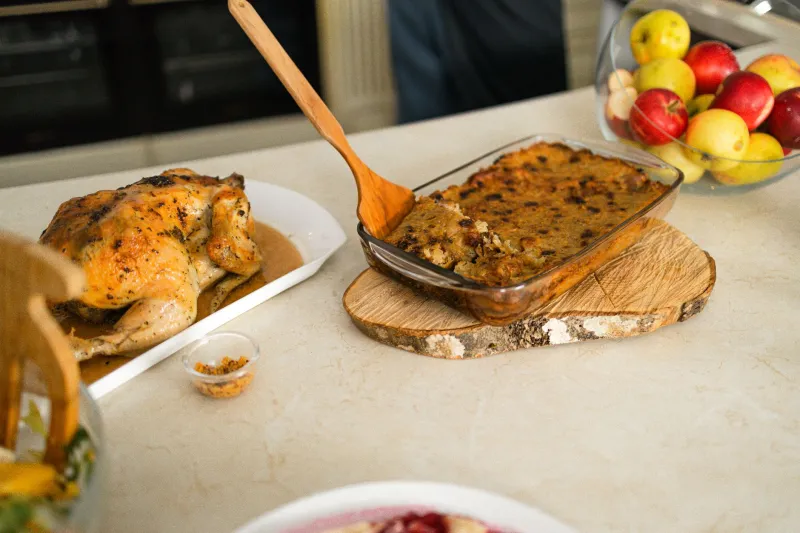
Try a spoonful stirred through lentils at the end of cooking, with a little olive oil and plenty of black pepper. It wakes them up no end. Chop some into a butter and slide it under the skin of a roast chicken, or rub it over the outside with thyme. It is excellent with roast cauliflower, scattered over the florets before they go in the oven. A little chopped preserved lemon in a tuna mayonnaise sandwich is a very good lunch indeed. And on toast, with ricotta or cream cheese and a few chilli flakes, it is the sort of thing that makes a grey morning feel briefly Mediterranean.
It also earns its place in dressings. Mash a little into olive oil and lemon juice for a sharp, savoury dressing for winter salads or cold roast potatoes. Add it to yogurt with mint to spoon over roasted carrots. Stir it into a simple fish supper, or into the pan with a lamb hotpot when you want a bit of brightness. Once the jar is open, you will find uses for it.
A small jar with a long reach
Preserved lemons are one of those preserves that feel almost too simple to count. There is no drama to them. But that is exactly why I like making a jar in November. It is a ten-minute job that gives the winter kitchen a shortcut: something salty, sharp and bright that can lift a plain supper without any effort at all.
If you have a spare jar and a bag of unwaxed lemons, put them up this week. By the time the dark afternoons really settle in, you will be glad of a little yellow jar on the shelf, waiting to be opened.