Silvery Tins and Steamed Puddings: A Quiet Case for Tinned Milk

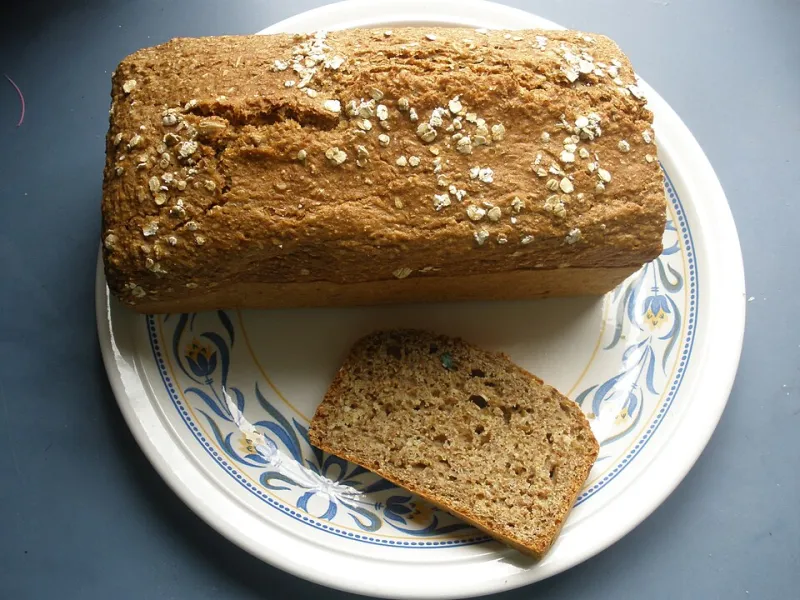
Photo: D J Shin, CC BY-SA 3.0, via Wikimedia Commons
Every kitchen I have ever trusted has one: a small silver drum at the back of the shelf, slightly dusty at the rim, its label a bit sun-bleached where it has caught the light from the oven door. Evaporated milk. Condensed milk. Sometimes both, tucked behind the gravy granules like shy relatives at a wedding.
They are not fashionable. Nobody posts a photograph of a tin of evaporated milk on a Sunday morning. And yet, when the weather turns and the fridge is down to half a cabbage and some doubtful cheese, that tin has saved more puddings than any fancy ingredient I could name.
The tin that quietly waits
I buy tinned milk the way I buy batteries: without ceremony, and always assuming I have some. It is one of those things that costs less than a coffee, keeps for the best part of a year, and has an uncanny habit of being exactly what a recipe needs at the last minute.
There is something deeply unfussy about it. No use-by standoff with the fridge drawer. No guilt. You can put it in a cupboard in August and take it out in February, and it will behave impeccably.
A short, faintly surprising history
The story starts in 1850s America, where a rather determined man called Gail Borden was looking for a way to keep milk from spoiling on long journeys. His answer was to cook off roughly half the water under vacuum, which left behind a thick, golden, faintly caramelised milk that would sit happily in a sealed can for months.
The sweetened version — condensed milk, with sugar doing the preserving as well as the water loss — became a genuinely useful thing in its day: shipped to soldiers, sent to workhouses, spooned into cups of tea where fresh milk was a luxury. By the twentieth century, brands like Carnation and Nestlé were household names in Britain, and wartime rationing cemented the tin's place in the nation's cupboards.
Then came the trifles and the fudge and the potato-topped pies of the 1970s, and then, somewhere along the way, refrigeration got reliable and the tin got pushed to the back. Which is a shame, because a good many of our best puddings still quietly depend on it.
The thrifty argument, plainly put
A tin of evaporated milk makes up to roughly a pint and a quarter once you add water. That is a useful amount of dairy for less than the price of a pint of fresh milk, and it will not go off before you get to it.
It is also the answer to a very specific British problem: the recipe that wants 100ml of milk and the fridge that holds a two-litre bottle. No waste, no sad half-pint going sour at the back of the top shelf.
And in the sort of weather that closes roads and empties supermarket shelves, a shelf-stable larder earns its keep in a way that a lovely artisan ingredient never quite does.
What it actually does well
- Fudge and tablet. Condensed milk turns the whole business into a one-pan affair. Melt it with chocolate and a knob of butter, beat it until it thickens, press it into a tin, and you have something worth wrapping in greaseproof for a neighbour.
- Caramel. Evaporated milk makes a lovely soft toffee sauce, and if you want the thick, dark stuff for a banoffee or a tart, simmer the opened contents in a bowl set over a pan of water until it deepens. I would not boil a sealed tin — it's an old trick with a genuinely alarming failure rate, and no pudding is worth a trip to A&E.
- Rice pudding and semolina. Half milk, half evaporated milk, a slow oven, a grating of nutmeg. The sort of thing that makes a kitchen smell like being eleven years old.
- Ice cream without a machine. Whisk evaporated milk until it's frothy, fold into whipped cream and whatever flavouring you fancy, freeze in a lidded box and stir once or twice. Not quite custard-based gelato, but entirely convincing on a Wednesday.
- Bread and buns. A splash in a milk bread dough or a batch of scones makes them softer and keeps them that way a day longer.
- Coffee, cocoa, chai. A spoonful where milk would go, and suddenly an ordinary mug feels like it came from a café.
It also happens to be the backbone of a decent pumpkin pie, a proper trifle and any number of traybakes that rely on that faint sweetness to carry them.
Buying it, keeping it, and knowing when it's had its day
Own-brand tins are perfectly good — this is not an ingredient that rewards spending. Full-fat is worth it for fudge, caramel and anything that needs to set firmly; the 'light' versions are fine in coffee and mashed potato, but they behave differently when you ask them to thicken.
Check the date when you buy, and turn the tins round in the cupboard now and then so you're always using the oldest first. Once opened, decant into a jug, keep it covered in the fridge and use within a few days. Leftover evaporated milk freezes beautifully in an ice cube tray, ready for the next batch of scones.
And if the tin is bulging, dented at the seam or smells sharp when you open it, be sensible and let it go.
Proudly unfashionable
I don't expect tinned milk to trend. It hasn't got a marketing department, it doesn't come in a nice ceramic pot, and it will never be described as 'artisan'. But it is thrifty, reliable and quietly capable of making something rather lovely out of very little — which, in my book, is the whole point of a larder.
So next time you're shuffling things about to fit in a new bag of flour, take a moment to nod at the tin at the back of the shelf. It's been waiting patiently, and it has plans.