Windfall to Winter Block: The Quiet Craft of Apple Cheese
There is a particular sort of November afternoon that seems made for apples. The light goes early, the kitchen window steams up, and somewhere in the shed there is a crate of fruit that needs dealing with before it turns. This is the moment for apple cheese: not a dairy cheese at all, but a dense, slow-cooked fruit preserve that sets firm enough to slice and tastes of spice, caramel and orchard sweetness.
It is one of the old larder’s quietest tricks. A heap of windfalls goes into a pan, disappears into pulp, and comes out as something you can put on the Christmas cheese board with a bit of a flourish. It costs very little. It asks for time rather than skill. And it keeps.
The Cheese That Isn’t
Apple cheese belongs to the same family as fruit butter and membrillo, though it is less fashionable than either. The name comes from the old sense of ‘cheese’ as a pressed block – a thing made solid by cooking and keeping. In farmhouse kitchens it was a way to use up a glut without needing a freezer, a sugar allowance or a great deal of fuss.
The result is dark, thick and spoonable while warm, then firm enough to turn out and cut once cool. It is not a jam for toast, though it does well there. Its real home is beside something savoury: a wedge of Cheddar, a slice of cold ham, a bit of pork pie, a few pickled walnuts.
Start with a Good Heap of Windfalls
Use British apples if you can, and don’t be too precious about variety. Windfalls are fine provided they are sound – cut out bruises, bird pecks and soft spots generously. A mixture gives the best flavour: Bramley for acidity and set, Cox or Egremont Russet for aroma, perhaps a few Worcester Pearmain if you have them. Late-season apples with a bit of sharpness are better than purely sweet ones, which can taste flat once cooked down.
Peel and core the fruit, then chop it roughly. There is no need to be neat. Put it in a heavy preserving pan with a splash of water – just enough to stop it catching before it softens – and cook gently until it collapses into a coarse pulp. Push it through a sieve or use a potato masher if you prefer a rougher texture. Weigh the pulp and return it to the pan.
The Long Cook
For every kilo of apple pulp, allow around 350–400g of sugar, depending on how sweet the fruit is and how sharp you like the finished preserve. Add the sugar gradually, stirring until it has dissolved, then bring the pan to a gentle simmer.
This is where the spices go in. Cinnamon is the obvious choice, but a little clove, allspice and ginger gives that rounded, old-fashioned warmth that suits cold weather. Go easy: apple cheese should taste of apples first. A squeeze of lemon helps keep the flavour bright. Some cooks add a splash of cider or a little black treacle for depth, though neither is essential.
Now the mixture needs time. Stir it often, especially towards the end, and keep the heat low. It will bubble and spit like a cauldron, so use a long spoon and keep your hands back. If you have a slow cooker, it can be useful for the first stage, but finish the mixture uncovered on the hob so it can reduce properly. The point is not to hurry it. An afternoon’s gentle cooking gives a smoother, deeper preserve than a fierce twenty minutes.
Knowing When It’s Ready
Apple cheese is ready when it has become thick enough to mound on a spoon and hold its shape. A good test is to draw a spoon across the base of the pan: the mixture should leave a clean trail that fills slowly. Drop a little onto a cold saucer and leave it for a minute. If it holds its shape and doesn’t leave a watery ring, it will set.
Remember that it will firm up further as it cools. It should be dense enough to slice, but not stiff as a board. If you are in doubt, cook it a little longer rather than a little less. A runny apple cheese is still pleasant, but it misses the point.
Potting, Wrapping and Keeping
You can pot apple cheese into hot, sterilised jars, leaving a small headspace and sealing while hot. Or you can make blocks – the older way – by pouring the mixture into small moulds or tins lined with parchment. Smooth the top and leave it somewhere cool and airy for a day or two until the surface dries and the block firms up.
Jars should be labelled and stored in a cool, dark larder. Blocks can be wrapped in greaseproof paper and then stored in a tin or cupboard. Both will keep for months, though the flavour is best within a year. Once a jar is opened, keep it in the fridge.
On the Winter Board
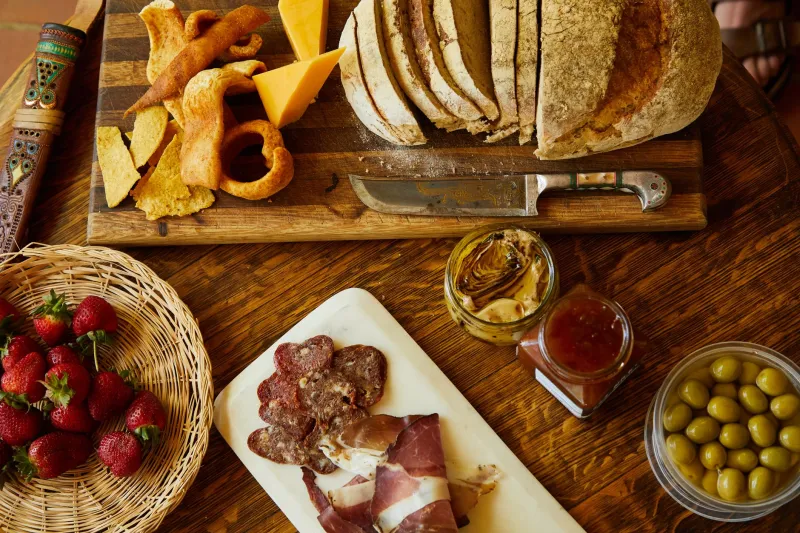
Turn a block out, cut it into thick slices, and put it on a plate with a sharp Cheddar and some cold ham. Add a few pickles, a handful of walnuts, maybe a slice of good bread. It is the sort of thing that looks as though you have been planning it for weeks, when in fact you simply spent a quiet afternoon with a pan.
Apple cheese also does good work in a sandwich, melted into a sauce for pork, or spooned alongside a baked Camembert. A small jar makes a decent Christmas gift, too, especially with a note saying what it is. People are always pleased by a preserve they haven’t had to think about.
A Note for the Quiet Larder
There is no need to make a great batch. If you have a modest heap of apples and an afternoon at home, make a small quantity. The pan does most of the work. What it asks of you is patience, a few spices and the willingness to let November be slow. That seems a fair trade for a block of something dark and good, waiting on the shelf for the cold weeks ahead.