Brown, Soft and Ready: A Small Jar of Medlar Jelly
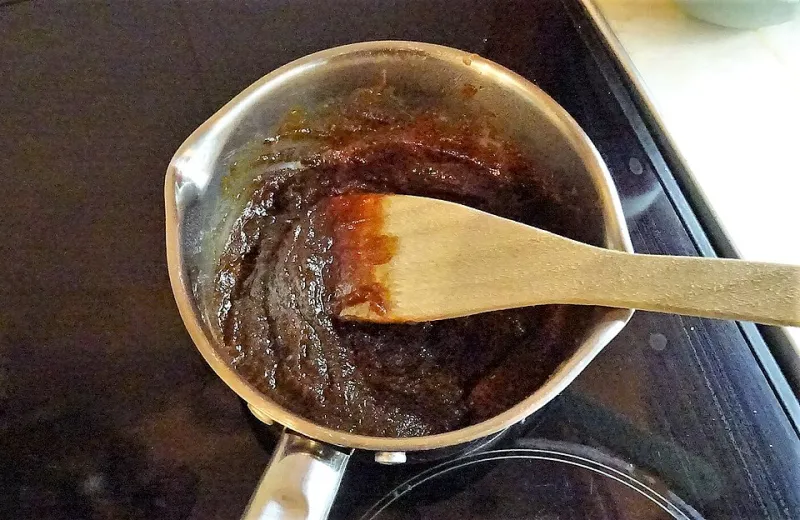
Photo: Rosser1954, CC BY-SA 4.0, via Wikimedia Commons
Medlars are not a fruit that rewards impatience. Pick one from the tree in October and it will be hard, sour and thoroughly unhelpful. Leave it in a cool shed until it turns brown and soft, however, and it becomes something else entirely: fragrant, apple-sauce-ish, a little winey, and ready for the preserving pan. By the second week of November, the box in the shed is usually worth opening. That wait is not a flaw in the fruit. It is the whole point.
The fruit that asks you to wait
If you have an old medlar tree nearby, you will know the look: small, squat, russet-brown fruit with an open calyx at the bottom, like a tiny crown turned inside out. They are hard as little stones when picked and deeply unpromising. Bletting is the old word for what happens next. The fruit softens, the skin wrinkles, the flesh darkens and the sharpness gives way to a sweet, spiced pulp. In a good year, the transformation takes three or four weeks in a cool, airy place. In a poor one, it takes longer and you simply have to keep looking.
Spread the fruit in a single layer in a cardboard box or on a tray lined with newspaper. Keep them somewhere cool but frost-free: a shed, a garage, an unheated spare room. Do not stack them deeply and do not wrap them in plastic. A little air is what keeps them from turning mouldy before they turn generous. Check them every few days and remove any that go bad.
Judging a bletted medlar
A medlar is ready when it feels soft all over, not just at one end, and the skin has gone from hard russet to a dull, wrinkled brown. The calyx end should give slightly when pressed. If you can cradle the fruit in your palm and feel it yield, it is ready. If it still feels firm in the middle, leave it be. A bletted medlar should smell faintly of apples and dates, with a touch of something fermented but not sour. The flesh inside will be dark and pulpy, somewhere between apple butter and thick compote.
Do not be alarmed by the look of it. Bletting is not rotting, though the two are close neighbours. Rot smells sharp and unpleasant; bletting smells rich and slightly winelike. Use your nose as much as your thumb.
A small batch of medlar jelly
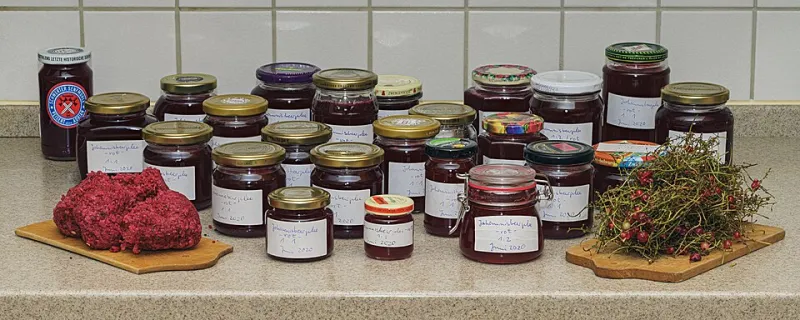
Medlar jelly is one of the quietest preserves in the larder. It is amber-brown, gently set, and tastes of the fruit rather than of sugar. It asks for no special equipment beyond a jelly bag or a clean muslin square, a large pan and a few small jars.
For a modest batch, take about 1kg of bletted medlars. Rinse them, cut them in half or quarters, and put them in a preserving pan with enough water just to cover. Bring to a simmer and cook gently for 30 to 40 minutes, until the fruit is completely soft and collapsed. Stir now and then, but not too vigorously; you are not trying to make a purée.
Tip the lot into a scalded jelly bag suspended over a large bowl and leave it to drip overnight. Do not squeeze. The first runnings give the clearest jelly, and the slow drip is part of the pleasure. In the morning, measure the juice. For every 600ml of juice, allow 450g of granulated sugar and about a tablespoon of lemon juice. Warm the sugar slightly, add it to the juice with the lemon, and stir over a low heat until dissolved. Then bring to a rolling boil and test for a set after 10 minutes. A spoonful on a cold saucer should wrinkle when pushed. Pot into warm, sterilised jars and seal.
Nothing wasted: the pulp and the cheese
The pulp left in the jelly bag is not rubbish. Push it through a sieve to remove skins and pips, then cook the sieved pulp with sugar to taste, stirring often, until it is thick enough to hold a spoon upright. That is medlar cheese: darker, denser and sharper than the jelly. Press it into small pots or a lined tin, cool it, and keep it in the fridge. It is excellent with cold pork, a sharp Cheddar or a slice of game terrine.
On the winter board
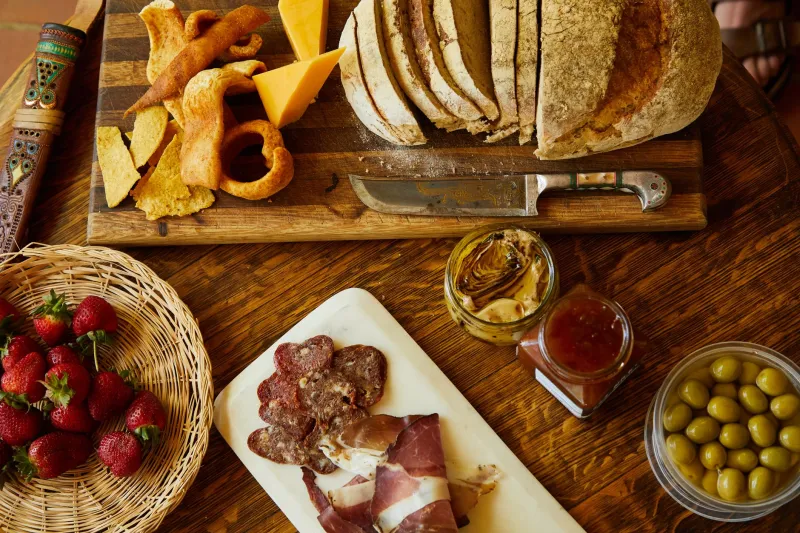
A jar of medlar jelly earns its place beside the cheese board rather than in the background. Its gentle acidity cuts through blue cheese and soft goat's cheese, and it is very good with cold ham, pork pie or leftover roast bird. At Christmas, a spoonful alongside a wedge of Lancashire or a crumbly Cheshire is a modest sort of luxury. It also behaves well on toast, in a gravy, or stirred into a dressing for cold meats.
This is not a preserve to make in industrial quantities. A few jars are enough. The medlar is an old-fashioned fruit that asks for patience, and the reward is a small, quiet jar that tastes of November: brown, soft, and ready when it is ready. That is the bargain. It is a good one.