The Careful Parcel: Sending the Larder by Post at Christmas
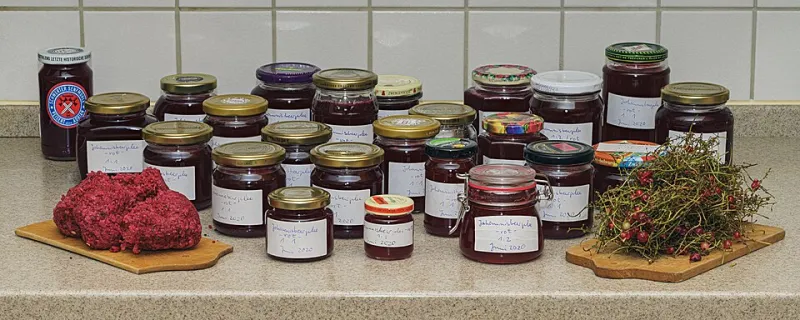
Photo: Franz van Duns, CC BY-SA 4.0, via Wikimedia Commons
There is a particular satisfaction in posting a Christmas parcel that smells faintly of spice and vinegar through the cardboard. It is a thrifty sort of generosity: a few small jars, a tin of biscuits, a hand-written label. But the post is not a gentle courier. Parcels are tipped, stacked, chilled in vans and left in depots. If you want the contents to arrive looking as they did on your kitchen table, you have to choose carefully.
This is not about sending a hamper. It is about sending a handful of small, sturdy things that speak of your kitchen — and that survive the journey.
Why small jars beat a grandes hamper
A hamper is lovely, but it is heavy, expensive to post and often full of things the recipient did not ask for. Three or four 200ml jars, padded with newspaper and tied with string, cost far less to send and feel more personal. They also fit through a letterbox-sized world: easy to store, easy to open, easy to share.
The best postal gifts are modest. A jar of jam is a letter in edible form. It says: I thought of you, and I had a glut of blackberries.
What to leave on the shelf
The first rule of posting preserves is to be honest about what will survive. Soft-set jams, lemon curd, custard-based things, fresh cream, anything dairy, and runny chutneys are all risky. So are bottles of vinegar or alcohol, which are heavy and prone to leaking. Clip-top jars with rubber seals can pop open in transit; screw-top jars are safer. If a jar has a loose lid, it will find a way to leak.
Leave the delicate things at home. The Christmas post is no place for a wobbly jelly or a jar of home-made mayonnaise.
The six that travel
These are the things I would trust to a parcel box: firm, dense, acidic or dry. Each one is small enough to wrap properly and sturdy enough to take a knock.
1. Bramley and blackberry jam, 200ml
A firm-set jam is the backbone of a postal parcel. Bramleys bring plenty of pectin, blackberries bring colour, and a good hard boil brings a set that will not slide about. Cook to around 105C, test for a wrinkle on a cold saucer, and pot into small jars with a 1cm headspace. Add a wax disc if you like, then a new screw lid. Avoid anything softly set — it will weep into the parcel.
2. Spiced pear chutney, 200ml
Chutney is made for posting: thick, vinegary and robust. Use a vinegar-proof lid, mature the jars for four weeks before sending, and make sure the mixture is jammy rather than watery. A pear and walnut chutney with ginger and mustard seed is a fine thing with cheese or cold ham. Wrap it well; chutney is heavy for its size.
3. Apple and rosemary jelly, 125ml
A small jar of clear jelly looks like a jewel and travels beautifully. It is firm, acidic and light. Serve it with roast pork, cheese or cold cuts. Use a 125ml jar so the recipient can open it without committing to a month of jelly. A pretty label does most of the work here.
4. Thick shortbread
Shortbread is the postal biscuit par excellence: buttery, dense and forgiving. Bake it a little longer than you might for the tea table so it is crisp rather than crumbly. Pack fingers or rounds in a rigid tin, separated by greaseproof paper, and fill any gaps with scrunched paper. Avoid iced biscuits or anything fragile.
5. Scottish tablet
Tablet is dense, sweet and sturdy — far more robust than fudge. Wrap it in greaseproof paper, then in a small tin or a rigid tub. It will keep for a fortnight and crumbles only if dropped from a height. A small bag of tablet tucked beside a jar of jam makes a generous parcel without much weight.
6. Seeded oatcakes
Savoury oatcakes are the quiet hero of the postal box. They are firm, dry and made to be eaten with chutney or cheese. Pack them in a rigid tub with a sheet of greaseproof between layers. They will not mind a day in a sorting office. Add a note suggesting they be warmed for a minute before serving.
Jars, seals and labels
Use small jars — 125ml to 200ml is the sweet spot. Wash them in hot soapy water, rinse, and dry in a low oven. Fill while the preserve is hot, leave a little headspace, and wipe the rim and threads before sealing. New lids are worth the small expense; old ones can carry smells and fail to seal. Check each jar by pressing the centre of the lid: it should be firm and slightly concave.
Label every jar with the contents and the date. A simple printed label or a neat hand-written one is fine. Add a line about how to serve it: 'Good with cold ham' or 'Stir into yoghurt'. If you are posting glass, write the address on a card inside the box as well as on the outside. It is a small precaution that has saved many a parcel.
Packing the box
Choose a sturdy cardboard box, not a flimsy one. Put a layer of cushioning in the bottom — newspaper, recycled wool, bubble wrap. Wrap each jar individually, then place it so it cannot touch another jar. Fill every gap. Shake the box gently: if anything moves, add more padding. Tape all the seams, including the bottom. A 'fragile' sticker is a request, not a guarantee; the packing has to do the work.
For glass, double-boxing is sensible: put the padded inner box inside a slightly larger outer box with 5cm of cushioning all round. Keep the total weight under 2kg if you can, which keeps it in the small parcel bracket and makes it easier to carry.
The posting bit
Post early. Royal Mail's Christmas deadlines usually fall in the middle of December, but the queues build before that. Second class is fine for most parcels; tracked is worth it for anything precious. If you are sending to a UK address, a small parcel under 2kg is straightforward. For overseas, check customs rules before you seal the box — and leave out anything liquid or perishable.
A final note
The best postal parcels are not the biggest or the most elaborate. They are the ones that arrive intact, with a label in familiar handwriting and a jar that opens with a proper pop. A few small preserves, packed with care, will beat a grandes hamper every time — and the larder is the best place to start.