The Midnight Jar: Pickled Walnuts from Tree to Christmas Board
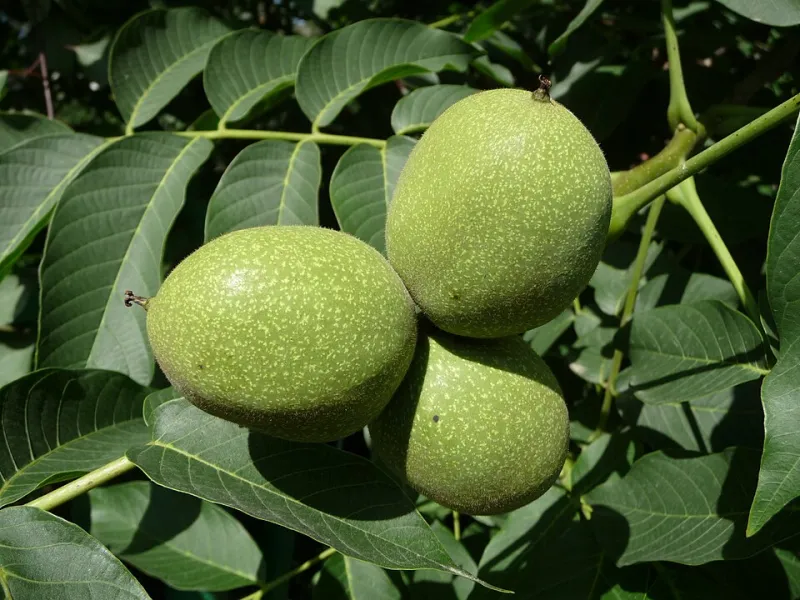
Photo: George Chernilevsky, Public domain, via Wikimedia Commons
There is a particular kind of jar that tends to get pushed to the back of the larder. It is not pretty in the way a jar of marmalade is pretty. It does not glow amber or catch the light. It sits there full of dark, wrinkled spheres in murky vinegar, looking more like something a chemist might have bottled in 1954 than something you would voluntarily put on a cheese board. And yet, come December, that jar earns its keep.
Pickled walnuts are one of the British larder’s more eccentric pleasures. They are sharp, spiced, faintly sweet and strangely meaty. They are not a quick pickle. They are not a fashionable pickle. They are, in many ways, the opposite of a fashionable pickle: slow, old-fashioned and entirely unbothered by what anyone on the internet is doing with chillies this week.
A Very Short Season, and a Long Wait
The first thing to get straight is that pickled walnuts are not made from the walnuts you crack at Christmas. They are made from green, unripe walnuts, picked in early summer before the shell hardens inside. In Britain that window is brief — often just a week or two in late June or early July, depending on the tree and the weather. Miss it and you are waiting another year.
This is why pickled walnuts feel like such a committed sort of preserve. You are not using up a glut at the end of the season. You are intercepting the season before it has really got going. The nuts are pricked, brined for days or weeks until they turn from bright green to a deep, near-black brown, then packed into spiced vinegar. Old recipes vary, as old recipes do. Some use malt vinegar, some white. Some add sugar, some allspice, cloves, peppercorns, bay. Some are ready by autumn; many are better left until Christmas, when the vinegar has mellowed and the nuts have taken on that firm, almost dense texture.
If you have never made them, it is worth putting next June in the diary. If you have a walnut tree nearby, or a friend with one, so much the better. But this is also a preserve that rewards the buyer. A good jar, made by someone who knows what they are doing, is a very fine thing indeed.
What Makes Them Taste Like That?
A pickled walnut is not crunchy like a fresh walnut, nor soft like a pickle from the chip shop. It has a firm, slightly resilient bite. The flavour is tangy and spiced, with a savoury depth that makes it sit oddly well alongside rich food. The vinegar does most of the work, but the walnut itself brings a faint bitterness and a meaty quality that you do not get from a pickled onion or a gherkin.
They are, in short, a condiment that behaves like a relish and a relish that behaves like a pickle. No wonder the Victorians liked them. Mrs Beeton had opinions. The old British larder had room for them alongside the chutneys and the bottled mushrooms. And while they may have fallen out of everyday use, they never quite disappeared. You still see them in delis, farm shops and the better sort of grocer’s, usually in a tall jar with a handwritten label and a price that makes you blink.
Buying a Jar Without Regret
If you are buying rather than making, look for whole walnuts that are still intact. A jar of broken bits is not the end of the world — they still taste good — but whole ones look better on a board and keep their texture. The liquor should be dark and spiced, and the jar should be full. Check the label for anything you would not want: some commercial pickles are heavily coloured, though a properly made pickle will be dark anyway from the brining.
British-made jars are worth seeking out. Farmers’ markets, delis and online specialists are your friends here. If you find a producer you like, buy two jars: one for Christmas, one for January. They keep well unopened in a cool, dark cupboard, and they are the sort of thing that improves a cold Sunday supper with very little effort.
Storing and Using the Jar
Once opened, keep the jar in the fridge and make sure the walnuts stay under the vinegar. Use a clean spoon, not a wet fork, and do not leave the jar open while you wander off to find the cheese. They will keep for weeks, if not months, though they rarely last that long once the family knows they are there.
The vinegar itself is useful. Do not tip it away. A spoonful stirred into a gravy, a dressing or a sauce for cold ham adds a sharp, spiced note that is hard to replicate. It is particularly good with beef and with anything involving mustard.
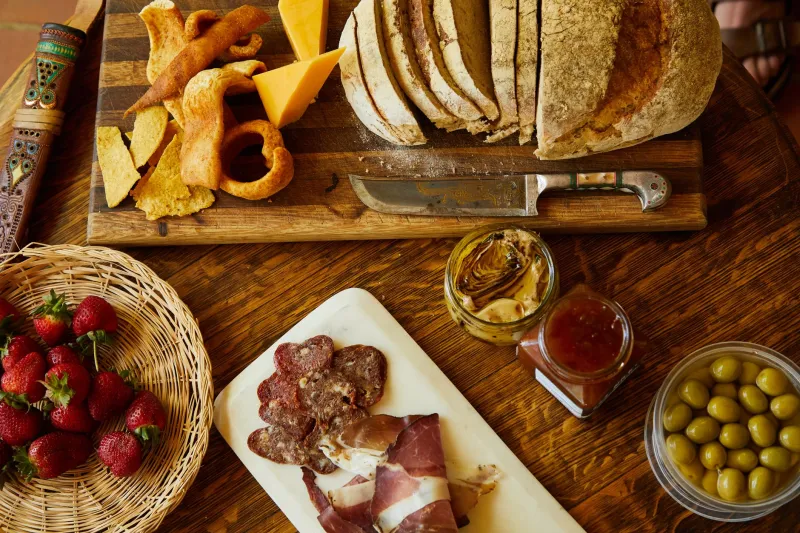
At the table, pickled walnuts are classic with cheese and cold meats. A sharp Cheddar, a bit of blue, a slice of ham or pork pie — all are improved by their dark, tangy company. Boxing Day is their natural habitat, but they need not be confined to it. Chop them into stuffing, add them to a winter salad with chicory and blue cheese, or lay them alongside game. A pickled walnut sauce, made with the chopped nuts, a little mustard and some cream or crème fraîche, is a fine thing with cold roast pork.
They are also excellent in a sandwich with mature Cheddar and a little chutney, though that is perhaps a step too far for some. Try it and see.
The Quiet Point of the Whole Thing
Pickled walnuts are not convenient. They are not a use-up-the-glut preserve. They are a preserve of patience and timing, a jar that asks you to notice a tree in June and then leave it alone until the dark afternoons. In a larder full of quick wins, there is something rather lovely about that.
So if you see a jar this month, do not walk past it. Buy it, put it in the cupboard, and bring it out when the cheese appears. It might be the most old-fashioned thing on the table. It might also be the first thing to be finished.