Three Jars, One Ham: The Christmas Eve Centrepiece

There is a particular sort of calm that comes over a kitchen on the twenty-fourth of December when a ham is out of the pan and cooling under a tea towel. Everything else that day is preparation. The ham is dinner, tea, sandwiches on the road and the beginning of four days of leftovers. It is the most efficient thing you will cook all month.
This is the version I make each year: a modest unsmoked gammon, simmered gently, then finished under one of three glazes, all of which start with something already on the preserve shelf. None of them requires a trip to a specialist shop on the busiest day of the year.
Choosing the cut
Buy unsmoked gammon — either a boneless middle cut or a boned and rolled joint — between 2 and 3kg. That size feeds eight hot, then gives you cold meat for days. Larger is fine, but a 5kg ham is a commitment and a fridge-space problem in a week when fridge space is the scarcest thing you own.
Ask whether it needs soaking. Some mild supermarket gammons are ready to cook; a proper dry-cured one from a butcher will need twelve hours in cold water, changed once. If the butcher looks vague, soak it anyway. A ham that is too salty is much worse than one that has given up a bit of its character.
The gentle cook
Put the joint in a large pan with a halved onion, a carrot, a bay leaf, a dozen black peppercorns and a small glass of cider or dry apple juice if you have one open. Cover with cold water, bring slowly to a bare simmer, and then leave it alone.
Timings are forgiving, so use this as a guide:
| Weight | Bare simmer |
|---|---|
| 1.5kg | 1 hour 40 |
| 2kg | 2 hours |
| 2.5kg | 2 hours 20 |
| 3kg | 2 hours 40 |
| 4kg | 3 hours 15 |
A bare simmer means maybe one bubble every few seconds. Boil it hard and you will get stringy meat, which is a waste of a good joint and a good afternoon. Skim the surface once or twice if you're passing.
Let it cool in the liquor if you have the time — half an hour is plenty — then lift it out, drain and pat dry. Keep the cooking liquid. It is ham stock, it is delicious, and it will make a lentil soup on the twenty-eighth that tastes like everything is going to be fine.
Three glazes from the shelf
Each makes enough for a 2.5kg ham, with a little left in the pan for spooning on later. None of them requires you to buy a tin of anything.
1. Bitter orange and mustard
Four tablespoons of Seville marmalade, two tablespoons of wholegrain mustard, a tablespoon of black treacle and a pinch of ground clove. Warm together in a small pan until it flows. This is the classic, and it is classic because it works: the bitterness cuts through the fat, the mustard gives heat, the treacle gives depth. If your marmalade is a sweet one, add a teaspoon of lemon juice.
2. Jelly, cider vinegar and clove
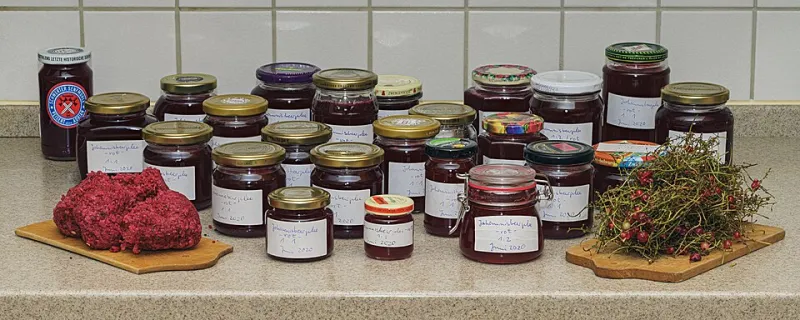
Four tablespoons of quince jelly, redcurrant jelly or anything pale and firm that has been sitting at the back since autumn. Melt it with two tablespoons of cider vinegar, a teaspoon of cracked black pepper and four whole cloves, then fish the cloves out with a spoon. Sharp, glossy and bright — the one for people who say they don't like sweet glazes.
3. Damson, pepper and a little treacle
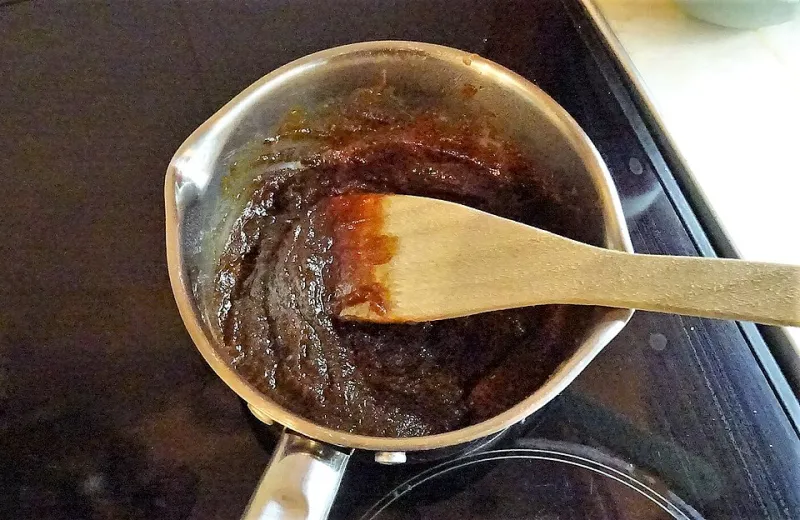
Four tablespoons of damson or plum jam, a tablespoon of black treacle, a teaspoon of English mustard powder and a good grind of black pepper, loosened with a tablespoon of Worcestershire sauce. Dark, sticky and slightly naughty. This is my favourite, and it makes the best leftovers.
The glazing window
Heat the oven to 200C (180C fan, gas 6).
Cut the rind off the cooled ham in one careful piece, leaving the fat behind. Score the fat in diamonds, going about a centimetre deep, and push a clove into every third intersection if you like that sort of thing. Put the ham in a roasting tin with a splash of the ham stock or water in the bottom to stop the glaze burning.
Brush on a coat of glaze and bake for ten minutes. Brush again. Back in for eight minutes. One last coat, then give it a final ten minutes, until the surface is dark, bubbling and slightly caught at the edges. Twenty-eight minutes of attention, in total. Watch the last five; sugar goes from beautiful to black very quickly.
Let the ham rest for at least twenty minutes under foil. It carves better and the juices settle back in.
The days after
The first night, serve it hot with mashed potato and something green and sharp. Then it becomes other things.
- Cold slices with piccalilli on rye, on the twenty-sixth, when nobody wants to cook.
- Cubed into a white sauce with cooked macaroni for a gratin on the twenty-seventh.
- Shredded through lentils with the ham stock and a spoon of mustard on the twenty-eighth.
- The bone in the freezer, labelled, waiting for pea and ham soup in January.
- Slices flat-frozen on a tray, then bagged, for sandwiches in the week nobody can face a shop.
Glaze leftovers can be warmed with a little more vinegar and used as a condiment for the cold meat. Ham stock freezes in tubs for months. Nothing from this joint goes into the bin, which is the best argument I know for cooking one bigger thing instead of four little ones.
A final note on timing
Bake it on Christmas Eve morning, not the evening. It needs to rest, cool and be out of the way before the real cooking starts. By four in the afternoon you'll have a ham on the board, a clean kitchen, and the rare and lovely feeling that the hard part is finished.